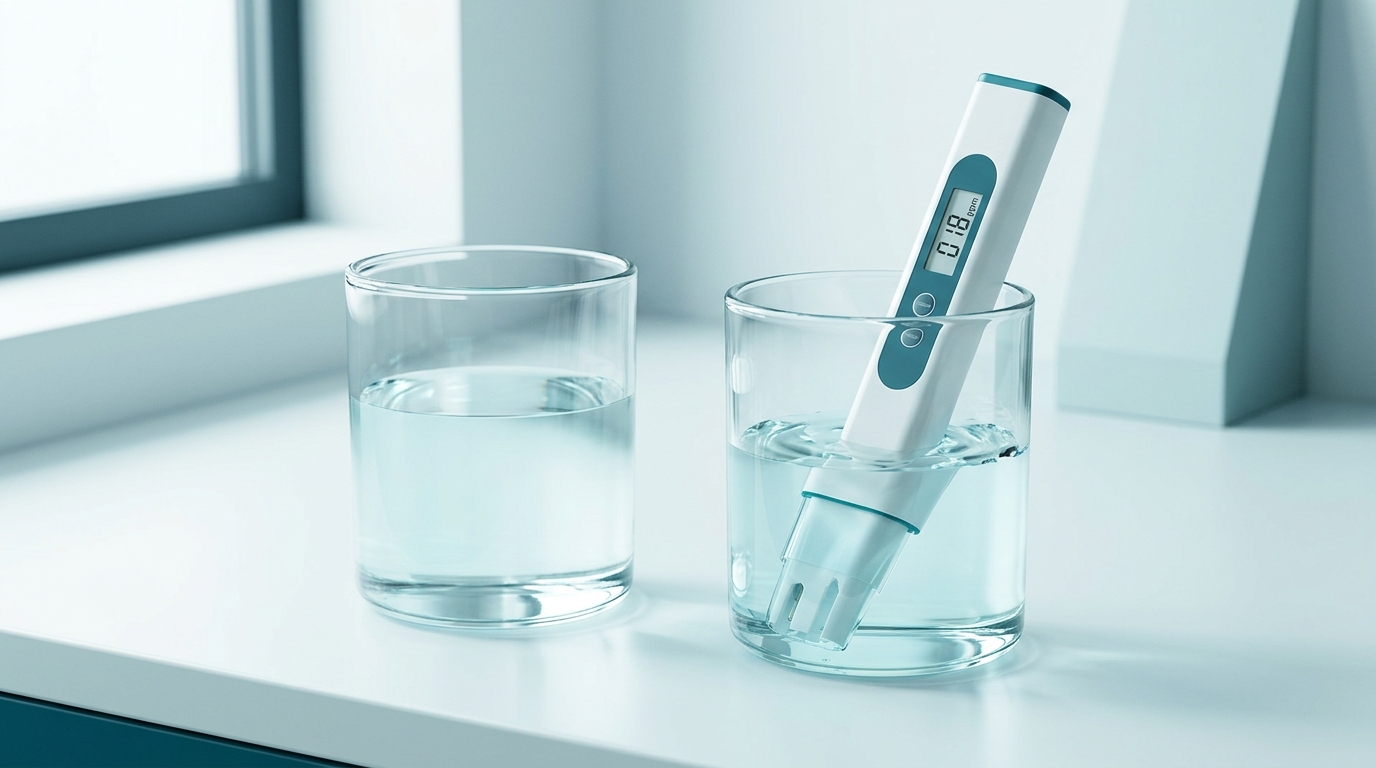
1. What Is TDS Creep (and Why Tankless Systems Show It More)?
When your RO system sits idle overnight, pressurized feed water on one side of the semi-permeable membrane slowly equalizes tiny amounts of dissolved ions into the stagnant purified water sitting inside the membrane housing. The first 200–500 mL drawn in the morning can read 2× to 5× higher than steady-state production water.
In a tank-based RO, that first high-TDS slug is diluted into 2–3 gallons of stored water. In a tankless RO, water flows straight from the membrane to your glass, so the first 10–20 seconds can read dramatically higher until fresh permeate flushes the housing (which is why many tankless units run an automatic membrane flush cycle).
2. How Different Post-Stages Affect Your TDS Meter
| Post-Membrane Stage | Typical TDS Impact | Why It Happens |
|---|---|---|
| Post-Carbon Polishing Filter | 0 to +5 ppm (after initial flush) | Removes residual tastes/odors; only new un-flushed cartridges shed temporary carbon fines. |
| Calcite Remineralization Cartridge | +15 to +50 ppm | Dissolves calcium carbonate to buffer acidic RO water and raise pH toward neutral. |
| Calcite + Corosex Alkaline Blend | +30 to +80+ ppm | Adds magnesium oxide alongside calcium, pushing pH higher (often 8.0–9.0) and raising conductivity. |
| UV Sterilizer Stage | 0 ppm | Ultraviolet light neutralizes microorganisms without adding or removing dissolved ions. |
3. Target TDS Ranges by Household Use
| Household Use | Typical Target TDS | Notes |
|---|---|---|
| Espresso / Pour-Over Coffee | 40–90 ppm (SCA target ~75–150) | Pure 0–10 ppm RO water can taste flat or under-extracted; remineralized RO or custom mineral packets improve extraction. |
| Ultrasonic Humidifiers & Steam Irons | < 20 ppm (no mineral stage) | Feed appliances with un-remineralized Point B RO water to prevent white mineral dust and scale buildup. |
| Daily Drinking Water | 5–30 ppm (standard) / 40–80 ppm (mineralized) | Both are normal depending on whether you prefer neutral/mineral taste or pure soft RO. |
4. Comparing Remineralization Media Types
| Media Type | Typical pH Lift | Typical TDS Added | Best Use & Tradeoff |
|---|---|---|---|
| Pure Calcite (CaCO3) | 6.8–7.4 | +15 to +40 ppm | Balanced neutral taste for coffee and daily drinking; dissolves slowly and rarely overshoots pH. |
| Calcite + Corosex Blend (MgO) | 8.0–9.2 | +35 to +85 ppm | Produces noticeable alkaline water; Corosex dissolves faster early on, so readings start higher in month 1 and taper down. |
| Alkaline Ceramic / Mineral Beads | 7.5–8.8 | +20 to +60 ppm | Often combines tourmaline, calcite, and trace minerals; TDS boost depends heavily on contact time inside the housing. |
5. How to Tell When a Remineralization Cartridge Is Exhausted
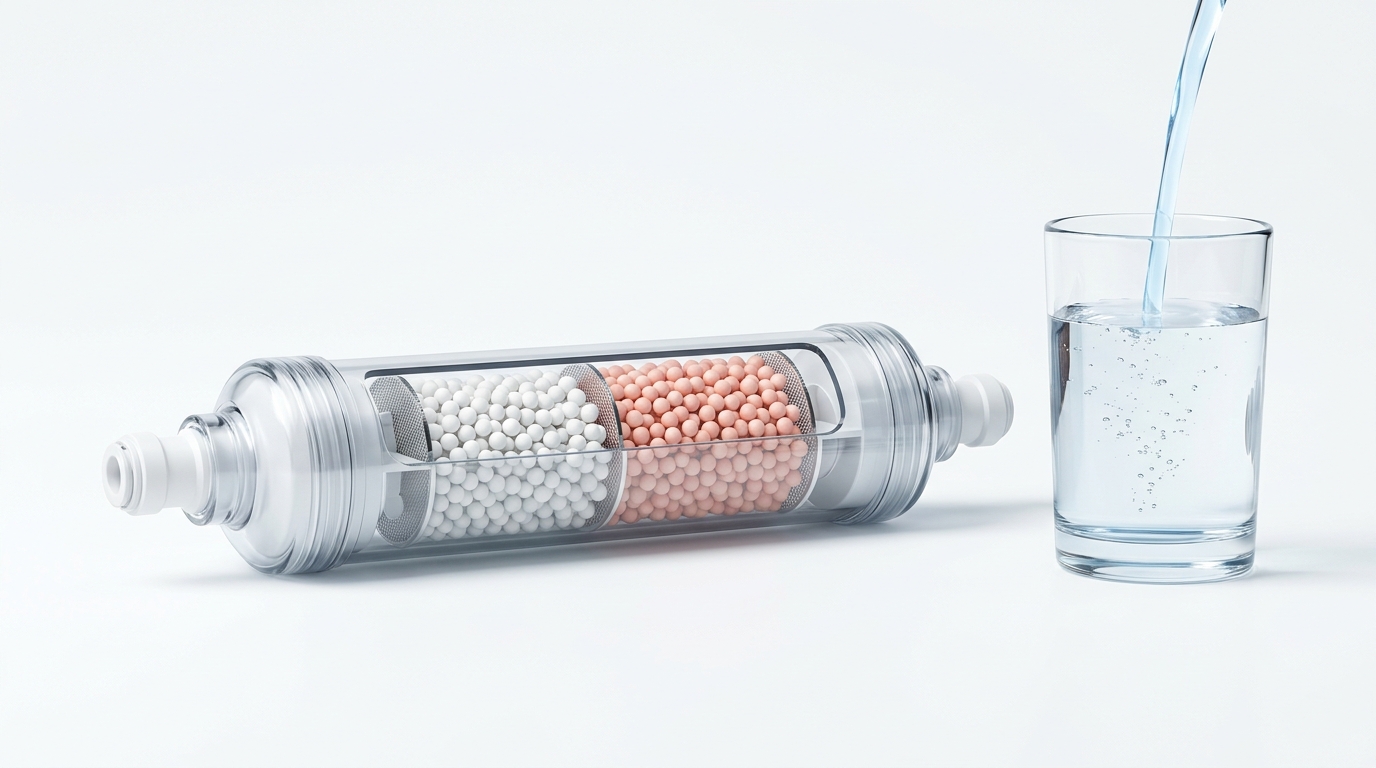
Unlike sediment filters that clog physically, mineral cartridges slowly dissolve away. You know it is time to swap the remineralization stage when two signs appear together: (1) faucet TDS drops back down within 5–10 ppm of your Point B membrane reading, and (2) water pH drops back toward slightly acidic 6.0–6.5 (pure unbuffered RO absorbs CO2 from air). You can also gently shake a dry inline cartridge—if it feels noticeably lighter or no longer rattles with granules, the media bed is depleted.
6. How to Sample Pure Membrane Water (Point B)
- Shut off the storage tank ball valve (if equipped) and cold supply valve briefly to relieve line pressure.
- Locate the 1/4-inch tubing exiting the RO membrane permeate port (before it enters the remineralization cartridge).
- Push in the collet ring on the quick-connect fitting to release the tubing, aim it into a clean glass, and turn the cold supply back on for 30–60 seconds before collecting your sample.
- Re-seat the tubing firmly until it stops, tug gently to verify the lock, and test your reading in our RO TDS Rejection Calculator.