Annual Consumable Cost Calculator
Typical Residential Intervals & Water Conditions
| Stage | Typical Interval | What Shortens Life |
|---|---|---|
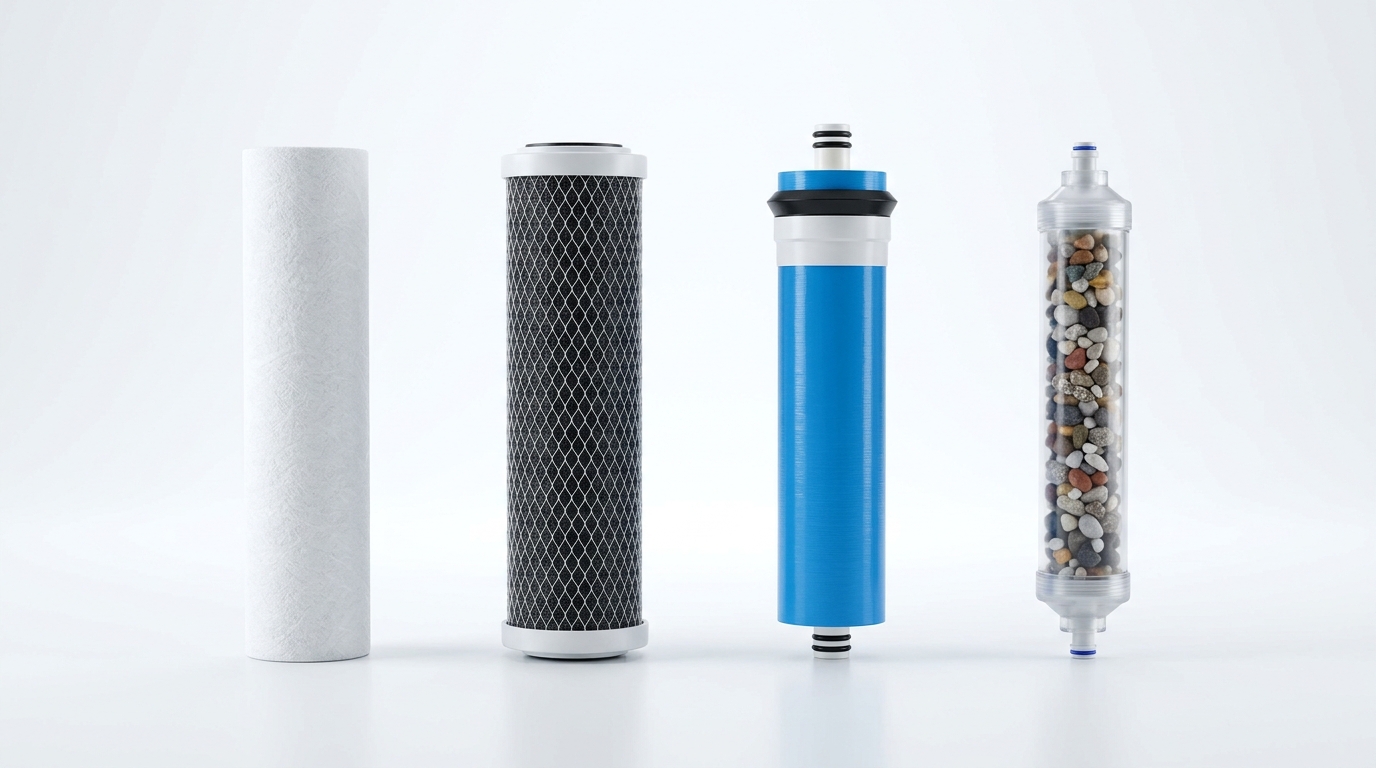
| Sediment + Carbon Pre-Filters | 6–12 months | High well-water silt (replace every 6 mo) or chloramine-treated city water (requires catalytic carbon). |
| RO Membrane (TFC) | 2–4 years | Hardness >250 ppm without a softener, or chlorine bleed-through from overdue carbon blocks. |
| Post-Carbon / Mineral Stage | 12 months | Heavy daily drinking/cooking volume; mineral media depletes faster on high-volume households. |
Standard 10-Inch vs. Proprietary Twist-Lock 5-Year Cost
When comparing replacement budgets, look beyond the upfront unit price. Open-standard 10" × 2.5" housings accept generic NSF-certified sediment (5 micron or 1 micron), carbon block (CTO), and standard 1812/2012 RO membranes, whereas proprietary twist-lock or tankless composite cartridges lock you into brand-specific replacements—often doubling 5-year consumable spend even though filter swaps take 2 minutes instead of 10.
| Cartridge Type | Micron / Media Spec | Where to Use It |
|---|---|---|
| Spun Polypropylene Sediment | 5 micron or 1 micron | Stage 1: traps rust, sand, and silt. Use 5 µm for heavy well silt so it does not blind prematurely. |
| CTO Carbon Block | 0.5–5 micron extruded carbon | Stage 2/3: removes free chlorine, taste, and odor with minimal carbon fines compared to loose GAC. |
| Catalytic Carbon Block | Surface-modified carbon | Required if your municipal utility uses chloramines (ammonia + chlorine), which pass through standard CTO faster. |
Adjusting Intervals by Water Source
- Chlorinated Municipal Water (60–250 ppm TDS): Standard 9–12 month pre-filter intervals and 3-year membrane life are realistic if feed pressure stays above 40 psi.
- Chloramine-Treated Municipal Water: Verify your water utility's annual Consumer Confidence Report (CCR). If chloramines are listed, use catalytic carbon and keep pre-filter swaps at 6–9 months so chloramines do not oxidize the TFC membrane.
- Hard or Silty Private Well Water (>250 ppm or >10 gpg hardness): Add a whole-house sediment pre-filter and water softener upstream if possible; otherwise expect 6-month sediment swaps and 1.5–2.5 year membrane life due to calcium scaling.
6-Step Annual Filter Swap & Sanitizing Checklist
- Shut off cold water supply and tank ball valve; open RO faucet to relieve pressure.
- Remove old pre-filter cartridges and wash housing sumps with warm soapy water (inspect and lightly lubricate housing O-rings with food-grade silicone).
- If sanitizing annually, remove the RO membrane temporarily and follow your manufacturer's unscented bleach or food-grade hydrogen peroxide flush protocol—never run bleach directly through a TFC membrane.
- Install fresh sediment and carbon pre-filters; flush carbon dust before reconnecting the membrane if possible.
- Reinstall membrane (or new membrane), turn supply back on, and check every fitting with a dry paper towel for slow seepage.
- Drain the first 1–2 full tanks before drinking to clear preservative and loose carbon fines.
Going away for 2+ weeks? When returning from vacation, drain the entire storage tank once and discard the first tankful before drinking so stagnant water sitting in the post-filter and tubing is fully replaced.