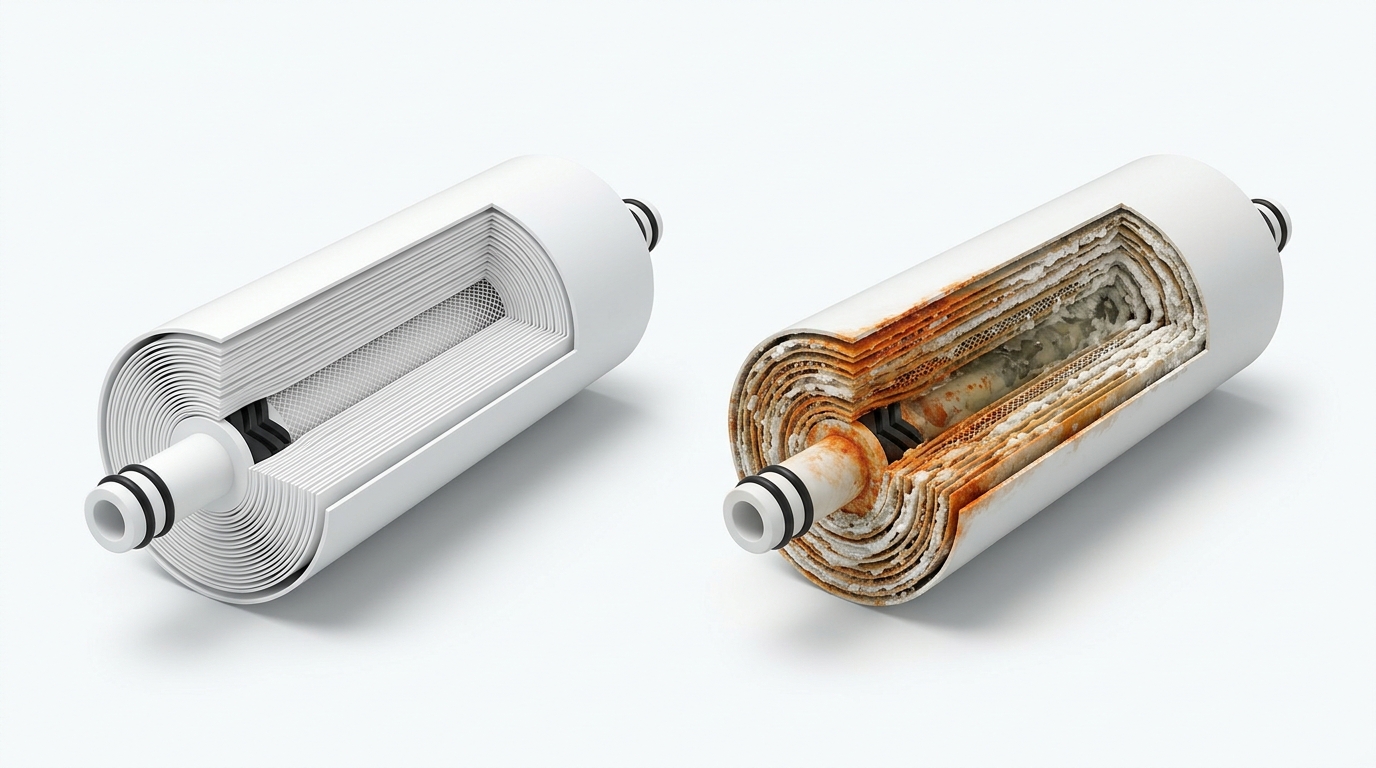
Stage-by-Stage: What Each Pre-Filter Actually Protects
| Pre-Filter Stage | What It Traps | What Happens When Overdue |
|---|---|---|
| Stage 1: Sediment (1–5 Micron PP) | Rust, sand, silt, suspended clay | Clogs pores, starving the system of feed pressure and slowing tank refill. |
| Stage 2/3: Carbon Block (GAC / CTO) | Free chlorine, chloramines, VOCs | Chlorine breaks through and chemically burns holes in the TFC polyamide membrane. |
Mineral Scaling vs. Chlorine Oxidation
- Mineral Scaling (Hardness >250 ppm): Calcium carbonate precipitates on the membrane surface, causing production flow to drop dramatically while TDS rejection stays relatively decent until scaling forces pressure channeling.
- Chlorine Oxidation (Municipal Water): Free chlorine or chloramines attack the polyamide thin film directly, causing TDS rejection to plummet while production flow can ironically feel normal or faster.
3 Hands-On Checks Before Ordering Parts
- Test for Chlorine Breakthrough: Collect a small sample from the tubing exiting your final carbon pre-filter (just before the RO membrane housing) and dip a swimming-pool or aquarium free/total chlorine test strip. Any reading above
0 ppmmeans your carbon stage is exhausted and actively damaging the membrane. - Inspect Sediment Saturation & Line Pressure: Open Stage 1 and check the cartridge core. A dark rust-brown, slimy, or collapsed pleated core means sediment is starving the system of pressure—swap pre-filters first and re-test flow before condemning the membrane.
- Time Pure Membrane Output (Tank Valve Closed): Shut the storage tank ball valve, open the RO faucet for 60 seconds, and time how long it takes to fill 1 cup (240 mL). A healthy 50–75 GPD membrane at 50–60 psi and 77°F typically delivers 130–200 mL/min (roughly 70–110 seconds per cup); cold winter supply water can slow that by 30%–40% without any membrane fault.
TFC vs. CTA Membrane Tolerance
| Membrane Chemistry | Typical TDS Rejection | Chlorine Tolerance | Primary Advantage |
|---|---|---|---|
| TFC (Thin-Film Composite) | 92%–98% | 0 ppm (zero tolerance) | Standard in 95%+ modern residential ROs; highest TDS rejection and widest pH range (2–11). |
| CTA (Cellulose Triacetate) | 85%–92% | Up to ~1.0 ppm free chlorine | Used in rare setups without carbon pre-filtration; vulnerable to bacterial degradation on non-chlorinated well water. |
Two Common Traps When Replacing an RO Membrane
- Unseated membrane after DIY swap: If you just installed a brand-new membrane and TDS still reads high, open the housing and check that the two small O-rings on the stem and the flared brine seal are intact, lightly lubricated with food-grade silicone grease, and pushed all the way into the internal socket.
- Reusing exhausted carbon pre-filters: Always replace carbon pre-filters at the same time you install a new TFC membrane so residual chlorine cannot damage the new element within weeks.